

Urticaria ayurvedic treatment and Hives in Kerala
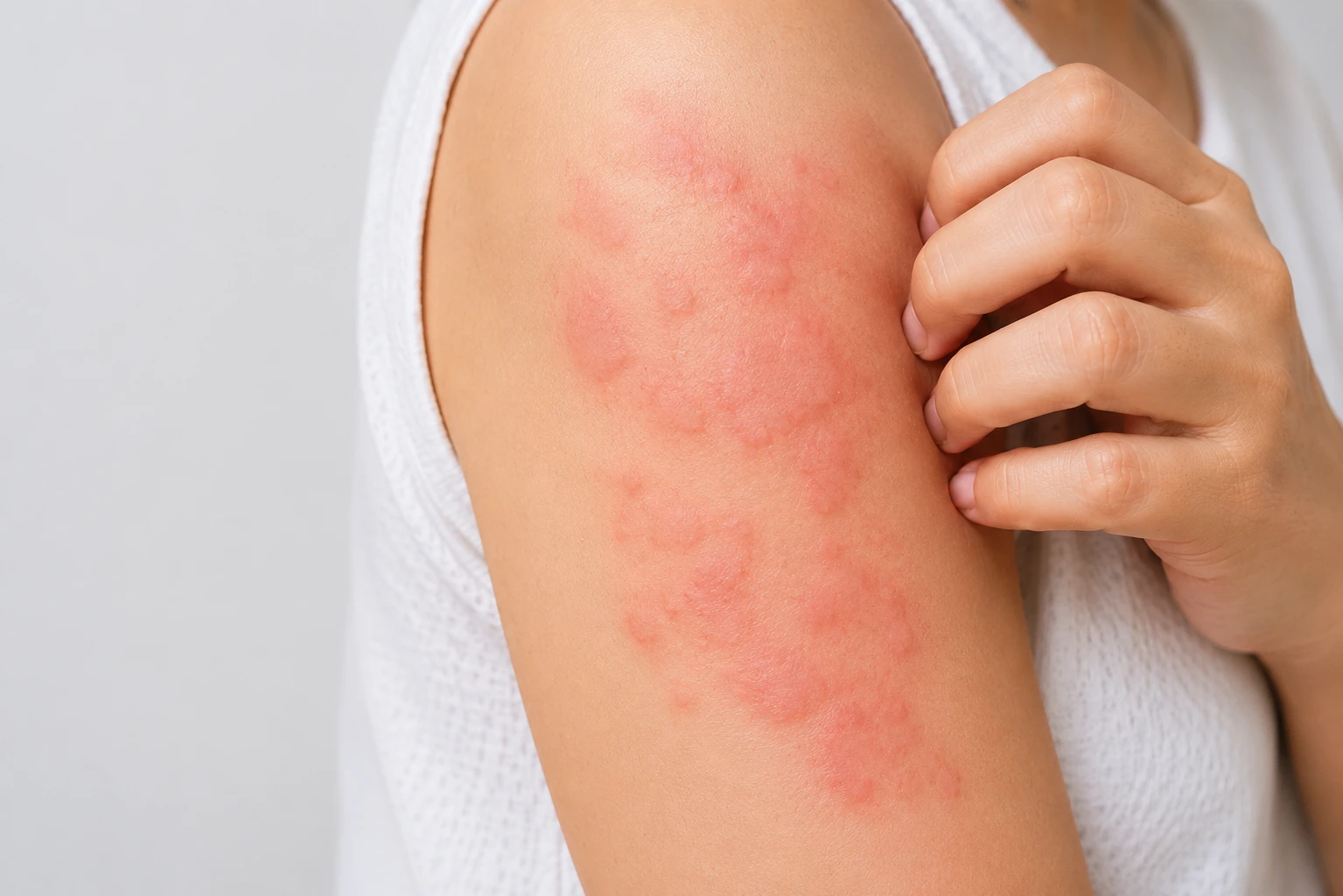
Urticaria, commonly known as hives, causes raised, itchy welts that may appear suddenly, fade and develop again elsewhere. A single welt often disappears within 24 hours, although new welts may continue to appear.
At Sreerudra Ayurveda Multispecialty Hospital and Research Centre, Urticaria Ayurvedic Treatment begins with a detailed physician-led assessment of the patient’s symptoms, medical history, current medicines, possible triggers, digestive health, lifestyle and Ayurvedic constitution. Based on the clinical evaluation, the treatment plan may include physician-prescribed Ayurvedic medicines, personalized dietary guidance, lifestyle support, selected therapies and regular follow-up. Panchakarma is considered only when the treating physician determines it is appropriate for the individual’s condition.
What Are Urticaria and Hives?
Urticaria and hives are two names for the same condition. The rash consists of raised welts that may be small and separate or join into larger areas. They can itch intensely and may cause warmth, burning or stinging. Welts can change shape, move between areas and fade without leaving a permanent mark.
Some patients also develop angioedema, a deeper swelling that may affect the eyelids, lips, hands or feet. Tongue or throat swelling requires emergency care.
Urticaria is not always caused by food allergy. Acute episodes may be associated with an infection, medicine, insect sting, food or another exposure. In chronic cases, a clear external trigger may not be found.
Acute and Chronic Urticaria Symptoms
An urticaria skin rash usually appears as raised, itchy welts that change in size or location. Symptoms may include redness or a change in skin colour, itching, burning, stinging, warmth and swelling.
Acute urticaria lasts less than six weeks. Chronic urticaria continues or recurs for six weeks or longer. Chronic hives symptoms may interfere with sleep, concentration, work and daily activities.
A lesion that stays in one place, becomes painful, bruises or leaves a persistent mark should be professionally assessed.
Types of Urticaria
Acute Urticaria
Acute urticaria appears for less than six weeks. It may follow an infection, a newly introduced medicine, a confirmed allergen or another temporary trigger.
Chronic Urticaria
Chronic urticaria refers to hives that continue or recur for at least six weeks. The cause may be difficult to identify, and ongoing monitoring may be needed.
Chronic Spontaneous Urticaria
Chronic spontaneous urticaria describes recurring hives without an obvious external trigger. It should not automatically be assumed to result from one particular food or environmental allergy.
Inducible Urticaria
Inducible forms are associated with physical triggers such as cold, heat, pressure, sunlight, exercise, sweating or scratching. Cold urticaria and cholinergic urticaria may require more specific evaluation.
Urticaria With Angioedema
Some people experience hives with deeper swelling.
Common Causes and Triggers for Urticaria
Possible causes and triggers differ between patients. They may include recent infections, certain medicines, confirmed food allergies, insect bites or stings, latex, pollen, pressure, heat, cold, sunlight, exercise, sweating and emotional stress.
Some chronic cases may be associated with autoimmune activity or thyroid disease, but autoimmune urticaria cannot be diagnosed from symptoms alone.
Because triggers are individual, avoid unnecessary restrictive diets. A food and symptom diary may help identify a repeatable relationship between an exposure and a flare-up. Any suspected medicine-related reaction should be discussed with the prescribing healthcare professional.
How Is Urticaria Diagnosed?
A medical history and skin examination are necessary to make a diagnosis. The physician may ask when the rash began, how often it appears, how long each welt lasts, whether swelling occurs and whether symptoms follow specific foods, medicines, infections, exercise, pressure, heat or cold.
Bring previous prescriptions, reports, a medicine list and clear photographs, because hives may disappear before the consultation. A diary recording episodes and possible triggers can also support assessment.
Blood tests, allergy tests or other investigations are not necessary for every patient. They may be recommended when the history, examination or associated symptoms indicate a need for further evaluation. Current urticaria guidance generally supports a focused assessment rather than extensive routine screening for every chronic case.
Ayurvedic Understanding of Urticaria and Sheetapitta
In Ayurveda, symptoms resembling urticaria are commonly discussed in relation to Sheetapitta. During consultation, the physician may assess the appearance and frequency of welts, itching or burning, digestion, bowel habits, sleep, stress, diet, lifestyle and individual constitution or Prakriti.
The assessment may also consider digestive strength, known as Agni, and Dosha involvement to individualize care.
Sheetapitta is a traditional Ayurvedic clinical concept. It should not be presented as an exact replacement for medical evaluation of every acute, chronic, inducible or autoimmune-associated form of urticaria.
Sreerudra’s Ayurvedic Treatment Approach
Urticaria Ayurvedic Treatment at Sreerudra begins with a physician-led consultation to understand the patient’s symptoms, identify possible contributing factors and prepare an individualized treatment plan.
Personalized Ayurvedic Medicines
Ayurvedic formulations may be prescribed according to the patient’s presentation, constitution, digestive health, associated conditions and current medicines. Patients should not start, stop or combine medicines without professional guidance.
Diet and Lifestyle Guidance
Dietary advice is personalized rather than based on a universal prohibited-food list. The physician may recommend avoiding a confirmed trigger, maintaining regular meals, supporting hydration, improving sleep and managing stress.
People searching for urticaria natural treatment should understand that lifestyle measures support care but do not replace appropriate assessment.
Panchakarma and Selected Therapies
Panchakarma is not compulsory. A procedure may be considered only after evaluating age, strength, condition, medical history and suitability. Some patients may need outpatient medicines and follow-up without Panchakarma.
Follow-Up and Monitoring
Progress may be monitored through flare-up frequency, severity of itching, duration of welts, swelling, sleep disturbance and suspected triggers. The physician may adjust the plan according to the patient’s response.
Ayurvedic Treatment for Chronic Urticaria
Urticaria Ayurvedic Treatment for chronic urticaria requires careful evaluation because recurring symptoms may not have an obvious trigger. Previous diagnoses, prescriptions, allergy reports and laboratory findings should be reviewed before planning care.
Chronic urticaria treatment in Ayurveda may include individualized medicines, diet and lifestyle guidance, trigger tracking and selected therapies when appropriate. Treatment duration cannot be predicted before assessment, and results vary according to the type of urticaria, associated conditions and response to care.
Do not discontinue antihistamines or other prescribed medicines without consulting the clinician responsible for them. Necessary dermatology, allergy or emergency evaluation should not be delayed. Evidence-based medical guidelines recommend second-generation antihistamines as the usual first-line treatment for chronic urticaria.
Treatment Approach for Acute Urticaria
Acute urticaria treatment depends on severity and the suspected cause. Assessment may consider recent infections, new medicines, foods, insect stings or environmental exposure.
Ayurvedic care should never delay emergency treatment for breathing difficulty, throat swelling, faintness or rapidly worsening symptoms. After urgent concerns have been addressed, an Ayurvedic physician can determine whether supportive care is appropriate.
Why Choose Sreerudra Ayurveda?
Sreerudra Ayurveda provides personalized Urticaria care based on the patient’s symptoms, diagnosis, digestive health, Prakriti, medical history and current medicines.
Our treatment approach may include detailed clinical evaluation, individualized Ayurvedic medicines, personalized dietary guidance, lifestyle counselling, selected therapies and regular physician-supervised follow-up.
When H. pylori, treatment, endoscopy, urgent investigation or specialist care is clinically required, appropriate guidance or referral is advised to support patient safety.
Book an Ayurvedic Consultation for Urticaria
If you are looking for Urticaria Ayurvedic Treatment in Kerala, consider booking a consultation when hives recur, persist for six weeks or longer, disturb sleep or daily life, or have no clearly identifiable trigger. Assessment can help document the pattern, review possible causes and determine an appropriate next step.
Book at Sreerudra Ayurveda in Alappuzha or Thiruvananthapuram. Bring prescriptions, reports, photographs of the rash and a list of current medicines and supplements.
Frequently Asked Questions
Is urticaria the same as hives?
Yes. Urticaria is the medical term for hives, which cause temporary raised, itchy welts.
What is Sheetapitta in Ayurveda?
Sheetapitta is an Ayurvedic clinical concept commonly associated with symptoms resembling hives. Assessment and treatment should still be individualized.
Is chronic urticaria always caused by allergy?
No. Chronic spontaneous urticaria can occur without an identifiable external allergen.
Is Panchakarma necessary for every patient?
No. It is considered only when the physician finds it suitable. Many patients may receive outpatient medicines, dietary guidance and follow-up without Panchakarma.
Can I continue my existing medicines?
Do not stop prescribed medicines without speaking to the clinician managing them. Bring a complete medicine list to your consultation.
How long does treatment take?
There is no fixed duration. It depends on whether the condition is acute or chronic, its frequency, associated conditions and response to care.