

Blog
Skin and Hair Changes During Cancer Treatment: Understanding Supportive Ayurvedic Care
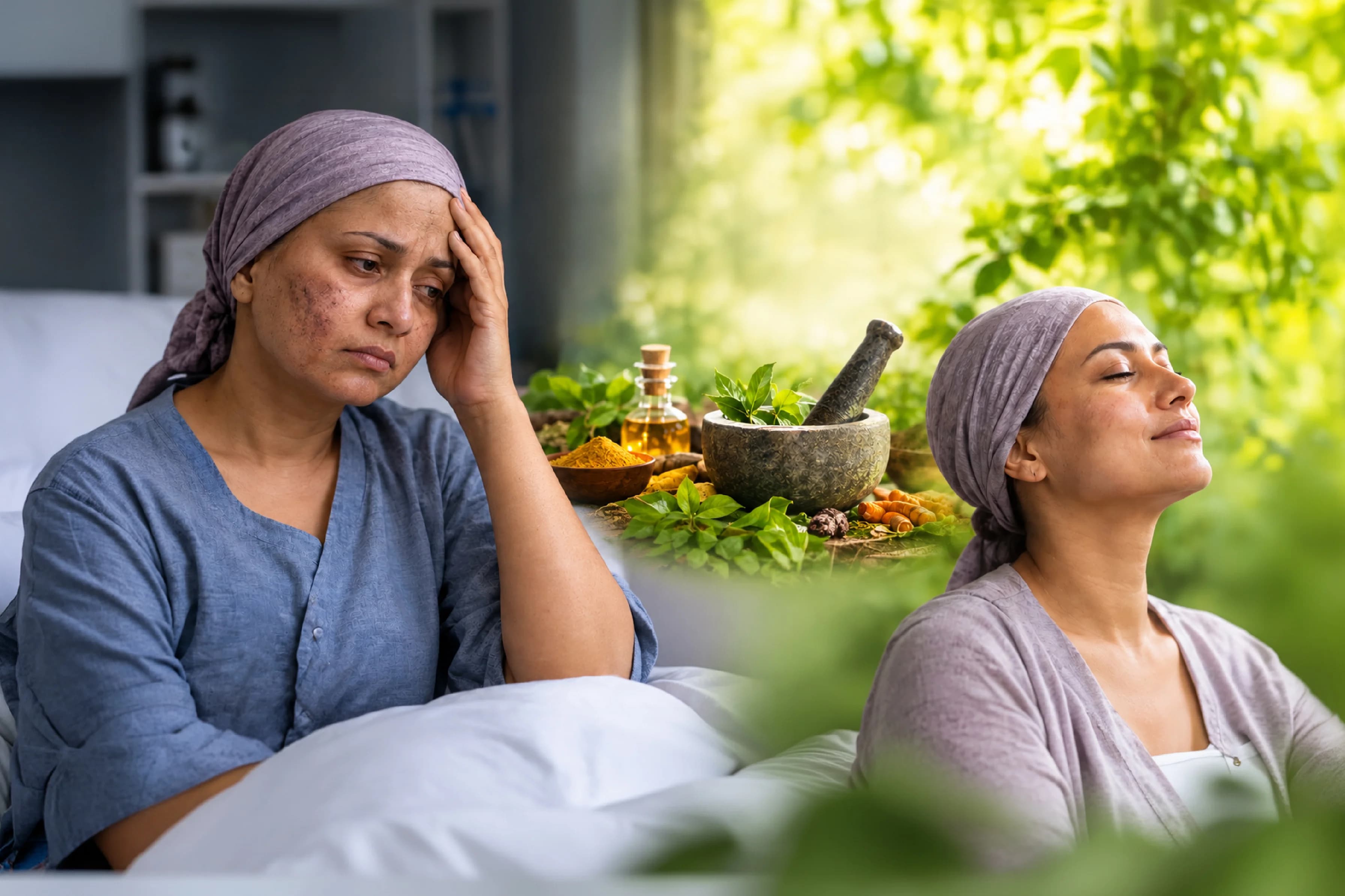
Skin and Hair Changes During Cancer Treatment: Understanding Supportive Ayurvedic Care
Medically Reviewed By: Dr. K. S. Vishnu Nampoothiri
Cancer treatment can bring changes to the skin and hair, affecting both physical comfort and emotional wellbeing. Patients may experience dry skin, itching, pigmentation, hair thinning or hair loss during chemotherapy, radiation therapy and other cancer treatments.
Although these changes vary from person to person, simple care practices and appropriate medical guidance can help patients manage them.
Ayurveda considers diet, lifestyle and individual wellbeing as part of its traditional approach to healthcare. Understanding how supportive Ayurvedic care may fit into the cancer treatment journey can help patients make informed decisions.
Why Does Cancer Treatment Affect Skin and Hair?
Cancer treatments can affect healthy cells along with cancer cells. Certain chemotherapy medicines affect hair follicles, while radiation therapy may cause skin irritation in the treated area. Some targeted therapies and immunotherapies can also produce skin-related side effects.
The type and severity of these changes depend on the treatment and individual response.
1. Keep Your Skincare Routine Simple
Cancer treatment may make the skin dry, sensitive or easily irritated. A gentle skincare routine can help reduce unnecessary discomfort.
- Use mild cleansers recommended by your healthcare team.
- Avoid harsh soaps and strongly fragranced products.
- Apply suitable moisturisers when advised.
- Avoid excessive scrubbing and exfoliation.
- Use lukewarm water instead of very hot water.
2. Be Careful When Using Ayurvedic Oils and Herbal Products
Ayurvedic oils and herbal preparations are traditionally used for external care. However, sensitive skin during cancer treatment may react differently to these products.
- Consult a qualified Ayurvedic practitioner before using herbal preparations.
- Check product ingredients with your healthcare team.
- Avoid applying unfamiliar products to irritated skin.
- Do not use herbal preparations on radiation-treated areas without medical approval.
Natural products are not automatically safe during cancer treatment.
3. Protect Your Skin From Sun Exposure
Certain cancer treatments can increase skin sensitivity to sunlight. Taking simple precautions may help reduce irritation.
- Wear comfortable protective clothing.
- Avoid prolonged direct sunlight.
- Prefer shaded areas when outdoors.
- Follow medical advice about suitable sunscreen.
- Ask your radiation oncology team about protecting treated skin.
4. Follow Gentle Hair and Scalp Care Practices
Hair thinning and hair loss can occur with certain cancer treatments. Gentle haircare may help reduce additional stress on the scalp.
- Use a mild shampoo suitable for sensitive scalps.
- Avoid excessive heat styling.
- Use a soft brush or wide-toothed comb.
- Avoid tight hairstyles and chemical treatments.
- Discuss scalp irritation with your healthcare team.
Hair regrowth varies depending on the treatment and individual circumstances.
5. Pay Attention to Nutrition and Hydration
Adequate nutrition supports general health during cancer treatment. However, nausea, reduced appetite and digestive difficulties may affect eating habits.
- Include suitable protein-rich foods.
- Include different types of fruits and vegetables in your meals, based on what you can comfortably eat.
- Maintain appropriate fluid intake.
- Follow personalised dietary recommendations.
- Avoid restrictive diets and unverified supplements.
Ayurveda traditionally considers food habits and digestion important aspects of health. Dietary recommendations should be adapted to the patient's medical and nutritional needs.
6. Take Care of Your Emotional Wellbeing
Changes in appearance can affect confidence and emotional health during cancer treatment. Hair loss and visible skin changes may make some patients uncomfortable in social situations.
- Talk openly with family members and caregivers.
- Seek emotional support when needed.
- Practise relaxation techniques suitable for your condition.
- Allow yourself time to adjust to physical changes.
- Consider joining a cancer-support group.
Emotional wellbeing deserves attention alongside physical care.
7. Know When to Seek Medical Advice
Not every skin or scalp problem should be managed at home. Certain symptoms require prompt medical attention.
Contact your cancer-care team if you notice:
- Severe or spreading skin rashes.
- Painful blisters or open sores.
- Increasing redness or swelling.
- Signs of skin infection.
- Persistent or worsening itching.
- Sudden changes involving the eyes or mouth.
Early medical assessment can help identify treatment-related reactions and guide appropriate care.
How Does Ayurveda Support Overall Wellbeing During Cancer Treatment?
Ayurveda follows a traditional approach that considers individual health conditions, food habits, daily routines and general wellbeing.
Depending on individual circumstances, Ayurvedic consultations may include:
- Individual health assessment.
- Dietary and lifestyle guidance.
- Discussion of suitable traditional therapies.
- General wellbeing and relaxation practices.
- Physician-guided care based on health requirements.
SREERUDRA AYURVEDA Multi-Speciality Hospital & Research Centre describes its healthcare approach through traditional Kerala Ayurveda, classical medicines, Panchakarma, diet and lifestyle guidance and rehabilitation-focused support.
Patients interested in complementary Ayurvedic care should discuss their existing cancer treatment and medicines with both their oncologist and qualified Ayurvedic practitioner.
Ayurvedic care should complement, not replace, prescribed cancer treatment. There is no established evidence that Ayurveda can prevent chemotherapy-related hair loss or guarantee the reversal of skin changes.
Frequently Asked Questions
1. Can Ayurveda help cancer patients during chemotherapy and radiation therapy?
Ayurveda may be considered as a complementary approach to supporting general wellbeing during cancer treatment. Traditional Ayurvedic consultations may involve discussions about dietary habits, digestion, daily routines, rest and individual health requirements.
However, the suitability of Ayurvedic medicines and therapies depends on the patient's cancer diagnosis, ongoing treatment and overall health. Some herbal preparations may interact with chemotherapy medicines or affect treatment-related side effects.
Patients should inform their oncologist about any Ayurvedic products or therapies they are considering. Ayurveda should complement prescribed cancer treatment and must never replace chemotherapy, radiation therapy, surgery or other recommended medical care.
2. Can Ayurvedic treatment reduce the side effects of cancer treatment?
Some patients explore Ayurveda to support their general wellbeing while managing the physical challenges associated with cancer treatment. Traditional approaches may include individualised dietary guidance, lifestyle recommendations and selected supportive practices.
However, there is insufficient reliable clinical evidence to establish that Ayurvedic treatment can consistently prevent or reduce cancer-treatment side effects. The safety and potential benefits of herbal products depend on their ingredients and quality.
Patients experiencing nausea, fatigue, skin irritation, digestive problems or other side effects should discuss them with their oncology team. Any complementary treatment should be evaluated for safety before use.
3. Is Ayurvedic medicine safe for cancer patients?
Not every Ayurvedic preparation is suitable for all individuals. Certain herbal preparations may interact with cancer medicines, influence liver or kidney function, or contain potentially harmful substances, including heavy metals in some poorly regulated products.
Safety depends on the ingredients, preparation quality, dosage, the patient's medical condition and ongoing medications.
Cancer patients should disclose all herbal medicines and supplements to their oncologist before starting them. They should also consult a qualified Ayurvedic practitioner and avoid products advertised as guaranteed cancer cures.
4. Can cancer patients follow Ayurvedic dietary practices during treatment?
Dietary guidance is an important part of traditional Ayurvedic healthcare. It may consider individual food habits, digestion, nutritional requirements and daily routines.
During cancer treatment, however, nutritional needs can change. Some patients experience nausea, reduced appetite, difficulty swallowing or digestive problems that affect their ability to eat adequately.
Dietary recommendations should therefore prioritise sufficient calories, protein, hydration and essential nutrients according to individual medical needs. Restrictive diets, fasting and unverified herbal supplements should be avoided unless specifically approved by the treating healthcare team.
An oncology dietitian can help patients develop a suitable nutritional plan alongside any complementary dietary guidance.
5. Can Ayurvedic treatment cure cancer or prevent it from returning?
There is currently no reliable scientific evidence establishing that Ayurveda alone can cure cancer, eliminate cancer cells or prevent cancer recurrence.
Cancer treatment depends on several factors, including the cancer type, stage, location and individual health condition. Evidence-based treatments such as surgery, chemotherapy, radiation therapy, immunotherapy and targeted therapy may be recommended depending on the diagnosis.
Ayurveda may be explored as a complementary approach to general wellbeing, but it should never delay or replace recommended cancer treatment or follow-up appointments.
Patients who have completed cancer treatment should continue regular medical monitoring and discuss any complementary therapies with their oncology team.
Conclusion
Skin and hair changes can be challenging during cancer treatment, but gentle personal care, appropriate nutrition and emotional support can help patients manage these concerns.
Ayurveda may be explored as a complementary approach to general wellbeing when its suitability is assessed by qualified practitioners.
At SREERUDRA AYURVEDA, patients can explore the hospital's traditional Ayurvedic healthcare approach and discuss their individual requirements with qualified practitioners. Safe and coordinated care should always remain the priority.