

Ayurvedic Treatment for Disc Prolapse in Kerala
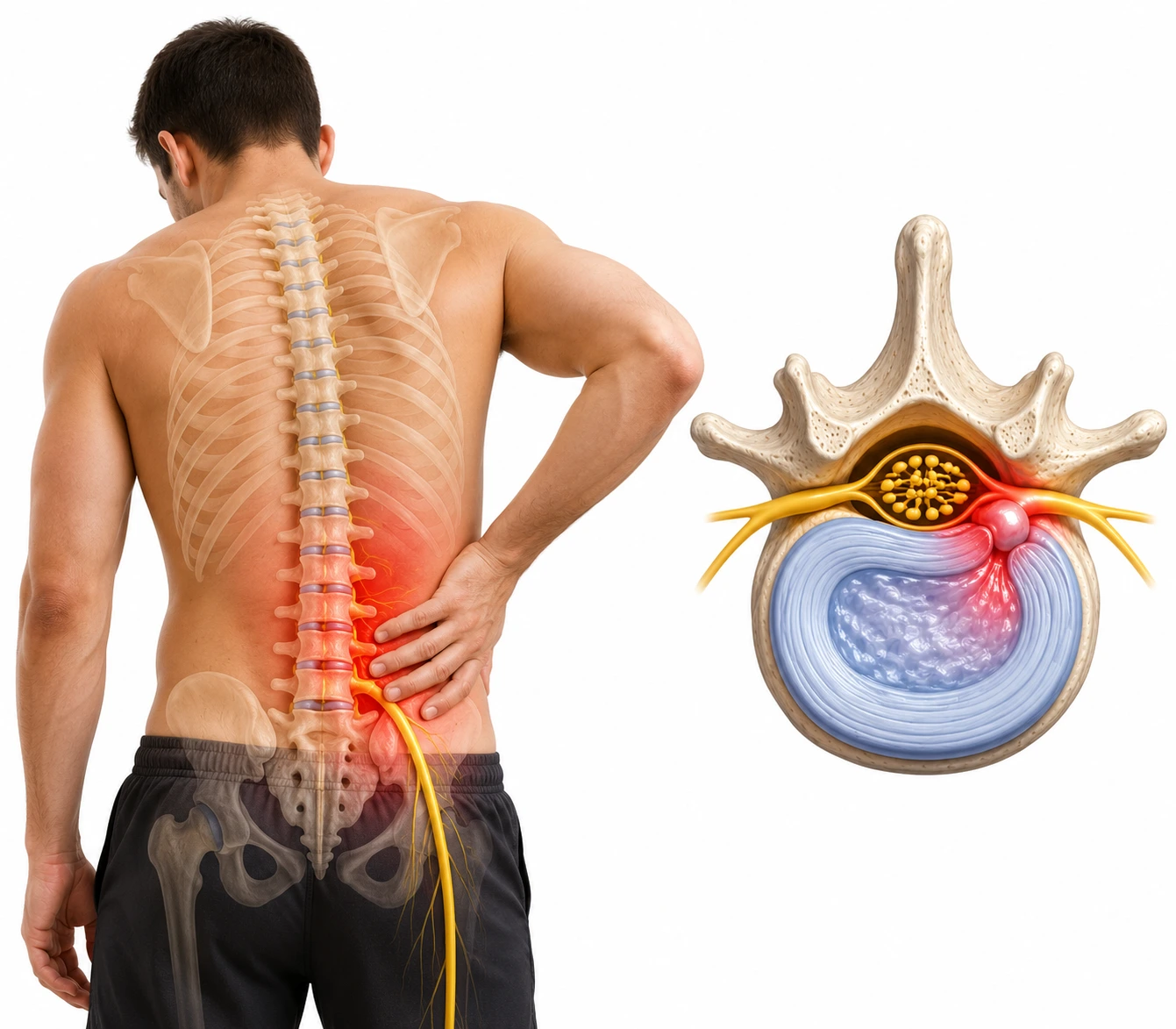
Disc prolapse, often described as a slipped disc or herniated disc, can affect the neck or lower back and may cause pain, stiffness, tingling, numbness, or radiating discomfort. Symptoms vary with the disc location and possible nerve involvement. A proper medical assessment is important before deciding on treatment.
At Sreerudra Ayurveda, disc prolapse care begins with understanding the individual rather than applying one fixed treatment to every patient. The physician considers the location and duration of symptoms, movement difficulties, physical condition, lifestyle, previous treatments, and available medical reports before planning care. Based on this assessment, selected Ayurvedic therapies, medicines, Panchakarma procedures, and supportive recommendations may be considered according to the person’s needs.
What Is Disc Prolapse? Understanding Slipped and Herniated Discs
The spine is made up of vertebrae separated by soft discs that help absorb pressure and support movement. When part of a spinal disc moves beyond its normal position, the condition may be described as disc prolapse. The terms slipped disc and herniated disc are also commonly used for disc displacement.
Disc prolapse can occur in different areas of the spine. When it affects the neck, it is generally described as cervical disc prolapse. When it affects the lower back, it is called lumbar disc prolapse. Symptoms depend on the affected disc and whether surrounding nerves are irritated or compressed.
Disc Prolapse Symptoms You Should Know
Disc prolapse symptoms are not the same for everyone. Some people mainly experience local back or neck pain, while others develop symptoms that travel along the path of a nerve. Common symptoms can include stiffness, tingling, numbness, weakness, and pain extending into the arms or legs.
Persistent symptoms, worsening pain, increasing weakness, or changes in sensation should be medically assessed.
Disc Prolapse Symptoms You Should Know
Disc prolapse symptoms are not the same for everyone. Some people mainly experience local back or neck pain, while others develop symptoms that travel along the path of a nerve. Common symptoms can include stiffness, tingling, numbness, weakness, and pain extending into the arms or legs.
Persistent symptoms, worsening pain, increasing weakness, or changes in sensation should be medically assessed.
Cervical, Lumbar and L4-L5 Disc Prolapse Symptoms
Cervical disc prolapse affects the discs in the neck. Symptoms may include neck pain, stiffness, shoulder discomfort, or pain that travels toward the arm or hand. Tingling, numbness, or weakness may occur when a nearby nerve is affected.
Lumbar disc prolapse affects the lower spine and may cause lower-back pain, stiffness, or discomfort extending toward the buttock or leg. L4-L5 disc prolapse symptoms can include lower-back discomfort and leg symptoms when the related nerve is irritated. However, the same MRI finding may not produce identical symptoms in every person, so assessment is important before treatment.
What Causes Disc Prolapse?
Disc prolapse can develop for several reasons. Age-related changes may gradually reduce the strength and flexibility of spinal discs. Repeated strain, physically demanding work, improper lifting, poor posture, certain injuries, and repeated stress on the spine may also contribute.
In some people, there may not be one clear cause. Understanding possible contributing factors helps the physician consider lifestyle, physical condition, symptoms, and daily activities when planning care.
Ayurvedic Treatment for Disc Prolapse: A Personalized Approach
Ayurvedic treatment for disc prolapse begins with an individualized assessment. The physician may consider where pain is located, how long symptoms have been present, whether pain travels into an arm or leg, the presence of tingling or numbness, movement limitations, physical strength, lifestyle factors, previous treatment, and available medical reports.
Depending on the findings, the treatment plan may include selected Ayurvedic therapies, Panchakarma procedures, herbal medicines, localized oil therapies, fomentation procedures, and supportive care, when clinically appropriate and guided by the physician. The exact combination, duration, and intensity are not the same for every patient. Treatment may be reviewed and adjusted according to the person’s response and changing needs.
The aim is to make treatment decisions according to the individual’s condition instead of relying on a standard package for everyone with the same diagnosis.
Ayurvedic Treatment for Slip Disc and Herniated Disc
People often use the terms slip disc, slipped disc, herniated disc, and disc prolapse when describing a disc-related spinal problem. Although these terms may be used interchangeably in everyday language, the location of the disc problem, severity of symptoms, and possible nerve involvement still need proper assessment.
Ayurvedic treatment for slip disc or Ayurvedic treatment for herniated disc should therefore be planned after a physician reviews the person’s symptoms and overall condition. Care may focus on supporting comfort, mobility, and day-to-day function through an individualized combination of therapies, medicines, and supportive recommendations where appropriate.
Ayurvedic Medicine and Therapies for Slip Disc
Ayurvedic medicine for slip disc may be considered as part of a broader treatment plan, but medicine should not be selected simply because two people have the same diagnosis. The choice of medicine, dosage, and duration should be decided by an Ayurvedic physician after assessment.
Therapies may also differ according to the location of the disc problem, physical condition, symptom severity, and treatment requirements. Localized oil therapies, fomentation procedures, selected Panchakarma procedures, and other physician-guided therapies may be considered when suitable.
How Is Disc Prolapse Treatment Planned at Sreerudra Ayurveda?
The treatment process generally begins with a consultation and detailed assessment. The physician may discuss the location and duration of pain, numbness or tingling, movement difficulties, previous treatments, daily activities, lifestyle, and available medical reports.
This assessment helps determine whether symptoms are mainly cervical, lumbar, or related to another spinal area and whether Ayurvedic care is appropriate. A personalized treatment plan can then be prepared based on the findings.
The plan may include selected therapies, Ayurvedic medicines, Panchakarma procedures, and supportive recommendations. As treatment progresses, the physician can review the person’s response and make changes when needed rather than following an inflexible routine.
What to Expect During Your Disc Prolapse Treatment Journey
The first step is assessment, followed by treatment planning based on symptoms, physical condition, medical history, and other relevant factors. During treatment, selected therapies and medicines may be reviewed according to how the person responds.
The physician may consider changes in pain, mobility, function, tingling, numbness, or other symptoms when reviewing the plan. Treatment duration cannot be assumed to be the same for everyone. It may vary according to the affected area, duration and severity of symptoms, physical condition, previous treatment history, and individual response.
Patients should therefore rely on physician guidance rather than comparing their treatment schedule with another person’s experience.
Why Choose Sreerudra Ayurveda for Disc Prolapse Treatment in Kerala?
Sreerudra Ayurveda follows a physician-guided approach to disc prolapse care, with treatment decisions based on individual assessment. Instead of treating all disc problems in the same way, the physician considers the affected spinal region, symptoms, physical condition, lifestyle, previous treatment, and overall treatment requirements.
This approach allows therapies, medicines, Panchakarma procedures, and supportive care to be selected according to the person’s needs and reviewed during treatment. For patients looking for disc prolapse treatment in Ayurveda, clear assessment and personalized planning are important when deciding whether a particular approach is suitable.
Consult an Ayurvedic Physician for Disc Prolapse
If you are looking for Ayurvedic treatment for disc prolapse in Kerala, a physician consultation can help determine the nature of your symptoms and whether an individualized Ayurvedic approach may be appropriate.
At Sreerudra Ayurveda, treatment planning is based on assessment, personal needs, and physician guidance rather than a one-size-fits-all method.
Frequently Asked Questions
What is the Ayurvedic treatment for disc prolapse?
Ayurvedic treatment depends on the individual’s symptoms and overall condition. It may include selected therapies, Panchakarma procedures, Ayurvedic medicines, and supportive care under physician guidance.
Can Ayurveda be considered for a slipped disc?
Ayurveda may be considered as part of a treatment approach for disc-related conditions, depending on the person’s symptoms, physical condition, medical history, and physician assessment.
Is Ayurvedic treatment different for a herniated disc?
Treatment is not based only on the name of the condition. A physician considers the affected spinal area, symptoms, nerve-related complaints, physical condition, and other relevant factors before recommending care.
What are the common symptoms of disc prolapse?
Symptoms may include back or neck pain, stiffness, tingling, numbness, weakness, or pain that travels into an arm or leg. The pattern depends on the location of the affected disc and possible nerve involvement.
Can disc prolapse affect the lower back?
Yes. Lumbar disc prolapse affects the lower spine and may cause lower-back pain or symptoms extending toward the buttock or leg. L4-L5 involvement may also produce leg-related symptoms when a nearby nerve is irritated.
How is treatment planned at Sreerudra Ayurveda?
Treatment begins with an assessment of symptoms, physical condition, lifestyle, previous treatments, and available medical reports. The physician then decides whether an Ayurvedic treatment approach is appropriate and prepares an individualized plan.